




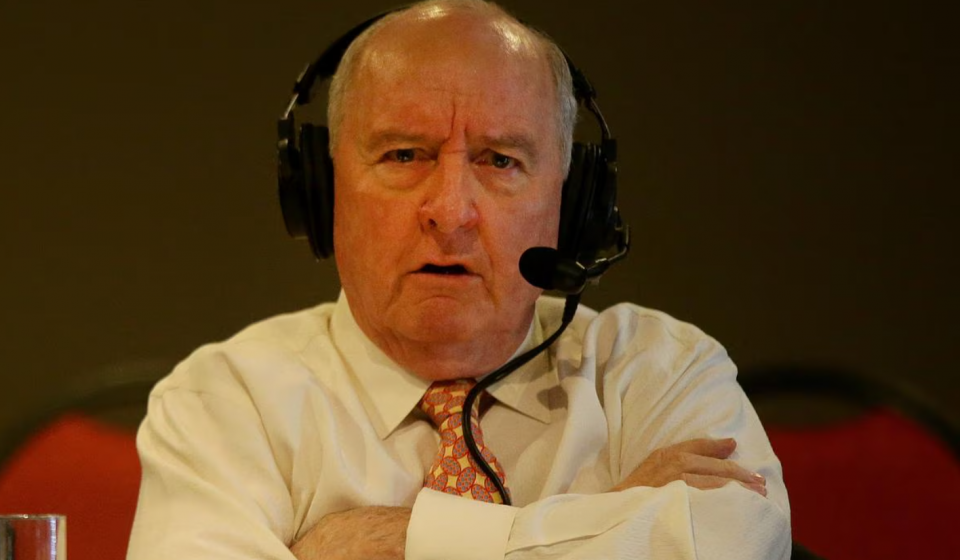

Alan Jones remains one of the most prominent—and controversial—figures in Australian media history. With a career spanning decades, Jones has wielded significant influence over public discourse through his work as a radio broadcaster, commentator, and public figure.
Born in 1941 in Queensland, Jones began his career in education before transitioning into media and politics. His early involvement in political advisory roles, including work with former Prime Minister Malcolm Fraser, provided him with insights into the inner workings of government and policy.
However, it was in radio broadcasting that Jones achieved widespread recognition. As a long-time host on Sydney’s 2GB radio station, he built a large and loyal audience. His program became known for its strong opinions, direct style, and engagement with political and social issues.
Jones’ influence extended beyond entertainment; he played a significant role in shaping public opinion on key national debates. His commentary often aligned with conservative viewpoints, and he was known for his ability to mobilize public sentiment on issues ranging from taxation and energy policy to immigration and infrastructure.
At the same time, Jones’ career has been marked by numerous controversies. His outspoken nature and provocative statements frequently attracted criticism from political leaders, advocacy groups, and the broader public. These controversies, while damaging to some aspects of his reputation, also contributed to his notoriety and sustained media presence.
Supporters of Jones argue that he represented a voice for segments of the population who felt underrepresented in mainstream discourse. They credit him with challenging political correctness and holding public figures accountable. Critics, however, contend that his rhetoric often crossed the line into divisiveness and sensationalism.
Jones retired from full-time radio broadcasting in 2020, marking the end of an era in Australian media. Nevertheless, his influence continues to be felt through ongoing commentary, public appearances, and his lasting impact on the industry.
His legacy is complex and multifaceted. On one hand, he is recognized as a highly effective communicator who understood the power of media in shaping public narratives. On the other, his career serves as a case study in the risks and responsibilities associated with influential platforms.
In examining Alan Jones’ career, it becomes clear that he is not merely a broadcaster, but a figure who has left an indelible mark on Australia’s media landscape. Whether viewed as a champion of free speech or a polarizing commentator, his role in shaping national conversation is undeniable.
